
Market Analysis
Enhancing the Accuracy of USDA Production Forecasts with Data-Fusion AI
Accurate crop production forecasts are vital for farmers, policymakers, and commodity traders alike. The U.S. Department of Agriculture (USDA) has long played a pivotal role in this, providing forecasts based on extensive data collection and expert analysis.
However, like all predictive models, USDA forecasts have limitations that arise from the complexity of agriculture and the variability of natural conditions.
In this context, the application of advanced technologies, such as data-fusion AI platforms like SatYield, can greatly enhance the accuracy and timeliness of global crop production forecasts by providing real-time data from multiple sources, including satellite imagery and advanced computer vision models.
The Strengths and Shortcomings of USDA Production Forecasts
USDA production forecasts are widely regarded as the "gold standard" in predicting agricultural output both in the U.S. and globally. These forecasts primarily draw on data from farmer surveys, historical crop performance, and meteorological information. By combining these sources with expert analysis, the USDA provides yield estimates for critical crops such as corn, wheat, and soybeans, which influence pricing trends and inform agricultural policies.
However, these forecasts are not without limitations. For instance, traditional data collection methods, like field surveys, can be time-consuming and susceptible to human error. Furthermore, USDA forecasts are typically only updated on a monthly basis, which means they may not fully capture sudden weather changes, pest outbreaks, or other environmental risks in real time. As a result, their accuracy has been the subject of significant academic scrutiny.
USDA Forecast Accuracy and Reliability
A wealth of research has explored the accuracy and efficiency of USDA crop production forecasts. Studies by Good and Irwin (2006, 2011, 2013) and others have demonstrated that USDA’s forecasts for corn and soybeans, particularly those released in May-July WASDE reports, tend to be unbiased and consistently accurate over time.
However, some evidence suggests that while corn yield forecasts have improved, soybean yield estimates have become increasingly conservative, often underestimating final yields during the 2004-2012 period. Other studies (Irwin, Good, and Sanders, 2014) indicate that while USDA forecasts are generally reliable, improvements in methodology and transparency could further enhance their accuracy.
Moreover, concerns about "smoothing"—the tendency for revisions to make large crops larger and small crops smaller—have also emerged. Research by Isengildina, Irwin, and Good (2006) highlighted patterns of predictability in USDA forecast revisions that may reduce accuracy.
Though efforts have been made to address these issues, including statistical corrections proposed by Xie and others (2016), forecast accuracy remains a central focus for both researchers and market participants.
Enter SatYield: A New Frontier in Crop Yield Forecasting
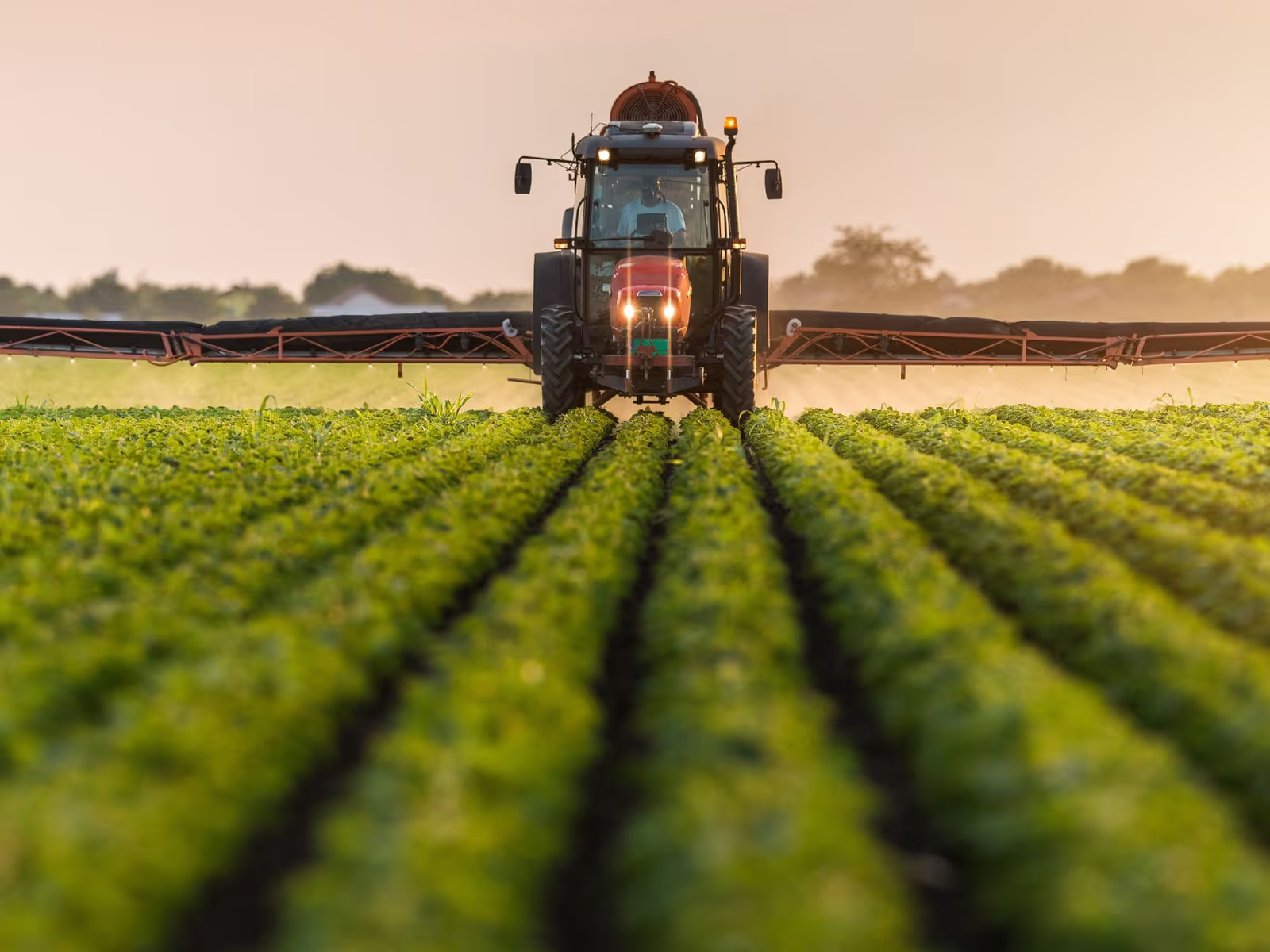
SatYield represents a new era of AI-driven crop forecasting that complements USDA efforts. By using satellite imagery, computer vision, and deep learning, SatYield provides a more dynamic and timely view of crop production.
The platform integrates real-time satellite data, historical weather patterns, soil conditions, and crop health indicators to produce highly detailed, accurate forecasts.
How SatYield Works
How SatYield Complements USDA Forecasts
While USDA forecasts provide a solid foundation for crop production estimates, SatYield’s real-time data and advanced analytics take these predictions a step further:
Real-Time Monitoring
While the USDA updates its forecasts monthly, SatYield offers continuous monitoring of crop conditions. This real-time insight allows for more responsive adjustments to forecasts, especially in response to sudden weather changes or environmental threats, such as droughts, floods, or pest infestations.
Increased Accuracy
The combination of satellite data and deep learning enables SatYield to identify subtle changes in crop conditions that may go unnoticed in traditional surveys. For instance, satellite data can detect variations in chlorophyll levels, a key indicator of plant health, which can be missed by ground-level assessments. By integrating this data with USDA estimates, stakeholders can achieve a more accurate prediction of final yields.
Risk Assessment
Beyond just crop yield predictions, SatYield provides valuable insights into potential risks. By monitoring weather patterns, soil conditions, and other environmental factors, the platform can forecast potential disruptions, such as extreme heat or early frost, that may negatively affect crop outcomes. This proactive approach to risk management can help farmers and policymakers make more informed, data-driven decisions in real-time.
Real-World Applications and Benefits
The combination of SatYield’s data-fusion capabilities and USDA forecasts offers numerous benefits across the agricultural supply chain:
For example, in one case study, SatYield detected early signs of drought stress in a major soybean-producing region weeks before USDA forecasts reflected the issue. This early warning allowed farmers to take mitigating actions, minimizing potential yield losses.
The Future of Crop Forecasting: A Hybrid Approach
By blending the USDA’s traditional forecasting methodologies with SatYield’s cutting-edge technology, the agricultural industry can benefit from the best of both worlds. The USDA’s large-scale data collection and historical expertise, when combined with SatYield’s real-time monitoring and predictive power, create a hybrid forecasting system that is more accurate and more responsive to evolving conditions.
As climate change continues to impact agricultural production with increasingly unpredictable weather patterns, the need for more accurate and timely forecasts will only grow. Platforms like SatYield represent the future of precision agriculture, enabling farmers, governments, and businesses to navigate these uncertainties with greater confidence.
Unlocking New Possibilities in Crop Production Forecasts
The USDA’s crop production forecasts have long served as a fundamental tool for managing agricultural resources and market expectations. Yet, as the world changes, the need for more real-time, accurate data becomes critical.
SatYield’s ability to integrate satellite imagery, computer vision, and deep learning technology enhances the utility and accuracy of USDA forecasts, facilitating better decision-making across the agricultural sector.
Together, these technologies are setting a new standard for crop yield prediction, making the future of agriculture more reliable and resilient than ever before.
Want to see SatYield in action? Schedule a live, interactive demo today to get started!
more from the blog