
Market Analysis
Brazil’s 2026 Crop Season Through a New Lens: SatYield on Bloomberg
Key takeaways
Brazil’s 2026 Crop Season Through a New Lens
Accurate, timely crop intelligence is becoming one of the most valuable inputs in global agricultural markets. That reality was front and center during a recent industry session focused on Brazil’s crop progress, where SatYield’s co-founder and CEO, Gabby Nizri, and Yoav Sharaby, Agronomic Crop Modeler joined Marina Cavalcante, Associate Analyst, Bloomberg Intelligence to examine how satellite-driven intelligence is reshaping yield forecasting, risk assessment, and trading decisions.
The session, now available on Bloomberg, explored Brazil’s soybean outlook through the lens of high-frequency satellite data, digital crop twins, and early-season signals, highlighting why traditional reporting frameworks are increasingly insufficient in fast-moving commodity markets.
Why Brazil’s Crop Signals Matter More Than Ever
Brazil plays a central role in global soybean supply, and small shifts in yield or planted area can ripple through pricing, trade flows, and risk exposure worldwide. Yet much of the market still relies on government reports and surveys that are delayed, low-resolution, and inherently reactive.
As highlighted during the session, this lag creates blind spots at precisely the moments when decisions matter most: during early growth stages, weather inflection points, and pre-harvest uncertainty. In contrast, satellite-based monitoring allows markets to observe crop development as it happens, not weeks or months later.
Seeing Stress Before the Market Reacts
One of the most striking takeaways from the presentation was how early satellite signals can reveal crop stress months before it becomes visible in traditional datasets.
Using Brazil’s 2024–25 soybean season as an example, SatYield demonstrated how vegetation indices, biomass metrics, and phenological tracking flagged emerging stress conditions roughly three months ahead of broader market recognition.
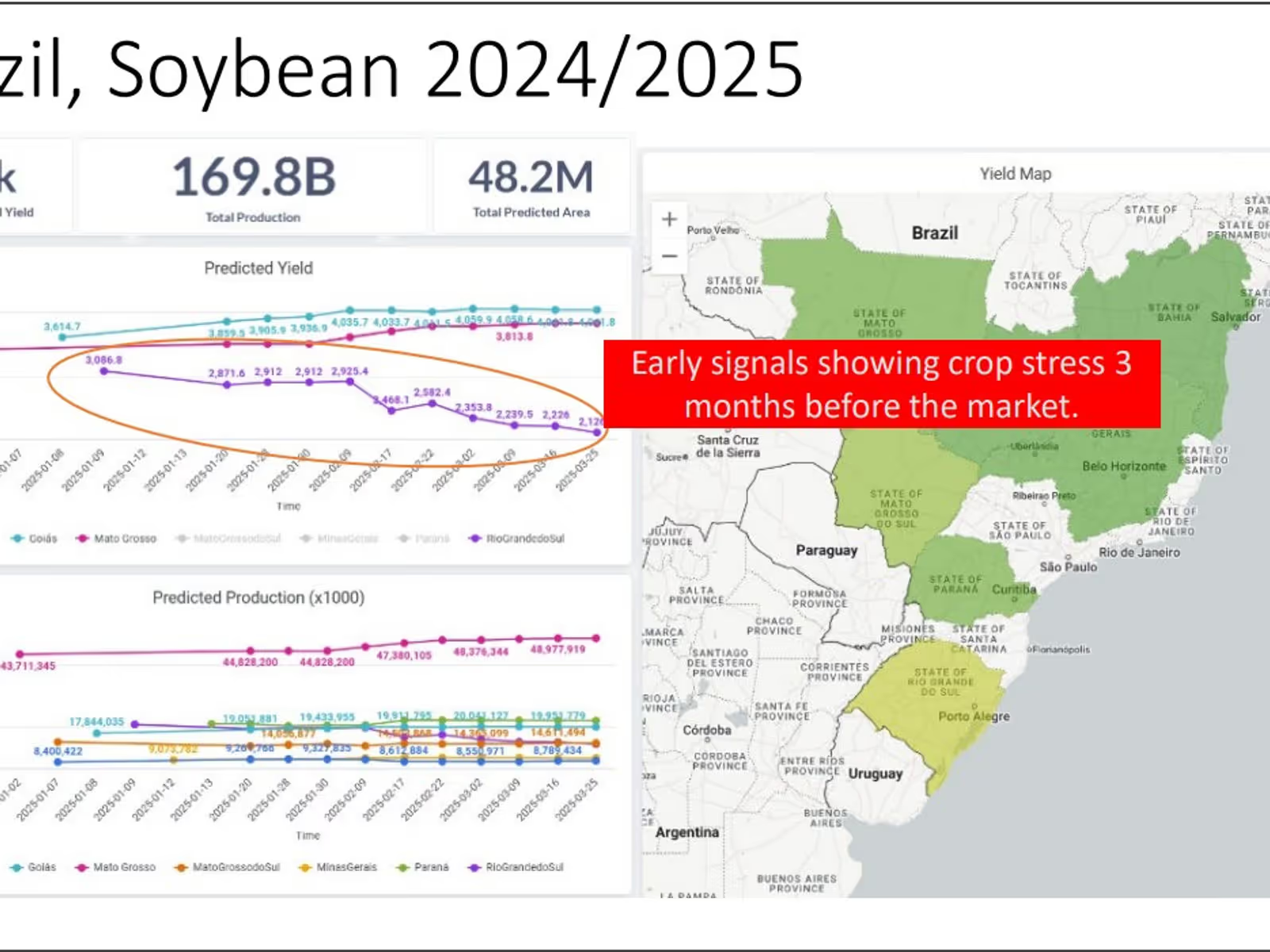
These early indicators are not abstract signals. They translate into measurable differences in yield trajectories at the state level—differences that can materially affect production estimates, hedging strategies, and pricing assumptions.
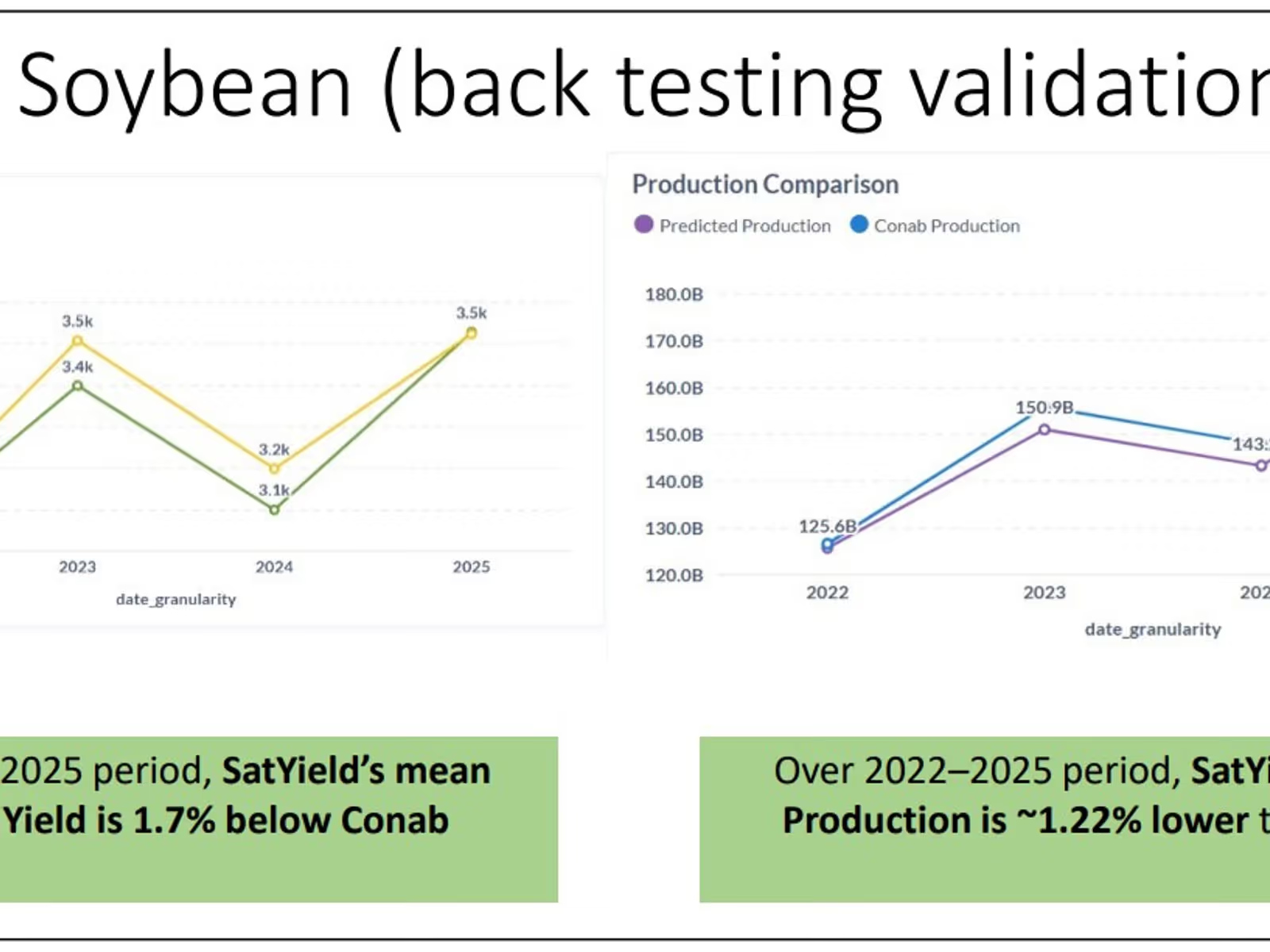
Back-testing results shared during the session showed that over the 2022–2025 period, SatYield’s soybean yield estimates tracked closely with Brazil’s CONAB figures, with mean yield deviations of roughly 1.7% and production estimates within approximately 1.2%. More importantly, those estimates were available earlier and updated continuously as conditions evolved.
Digital Twins: From Observation to Simulation
A core theme of the discussion was the role of digital crop twins in transforming raw satellite imagery into actionable intelligence. Rather than treating satellite data as static snapshots, SatYield integrates satellite, weather, and soil inputs into physics-informed crop simulations that evolve throughout the season.
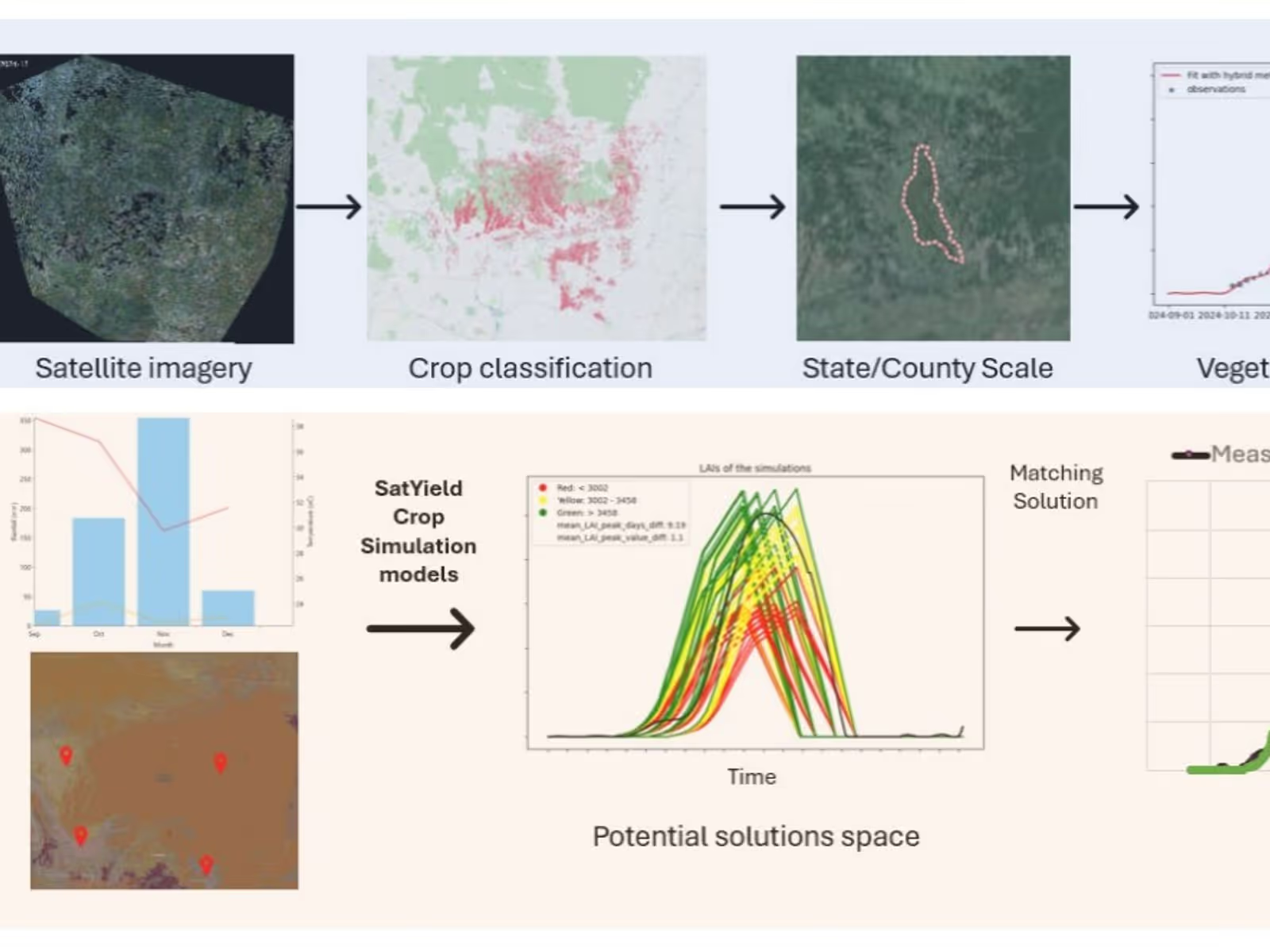
These digital twins continuously recalibrate as new observations arrive, enabling scenario analysis, synthetic data generation, and uncertainty reduction. As presented during the session, this approach allows analysts to move beyond simple monitoring toward true forward-looking insight, testing how weather, soil moisture, or growth-stage disruptions may influence final outcomes before they occur.
Expanding Coverage and Early Signals for 2025–26
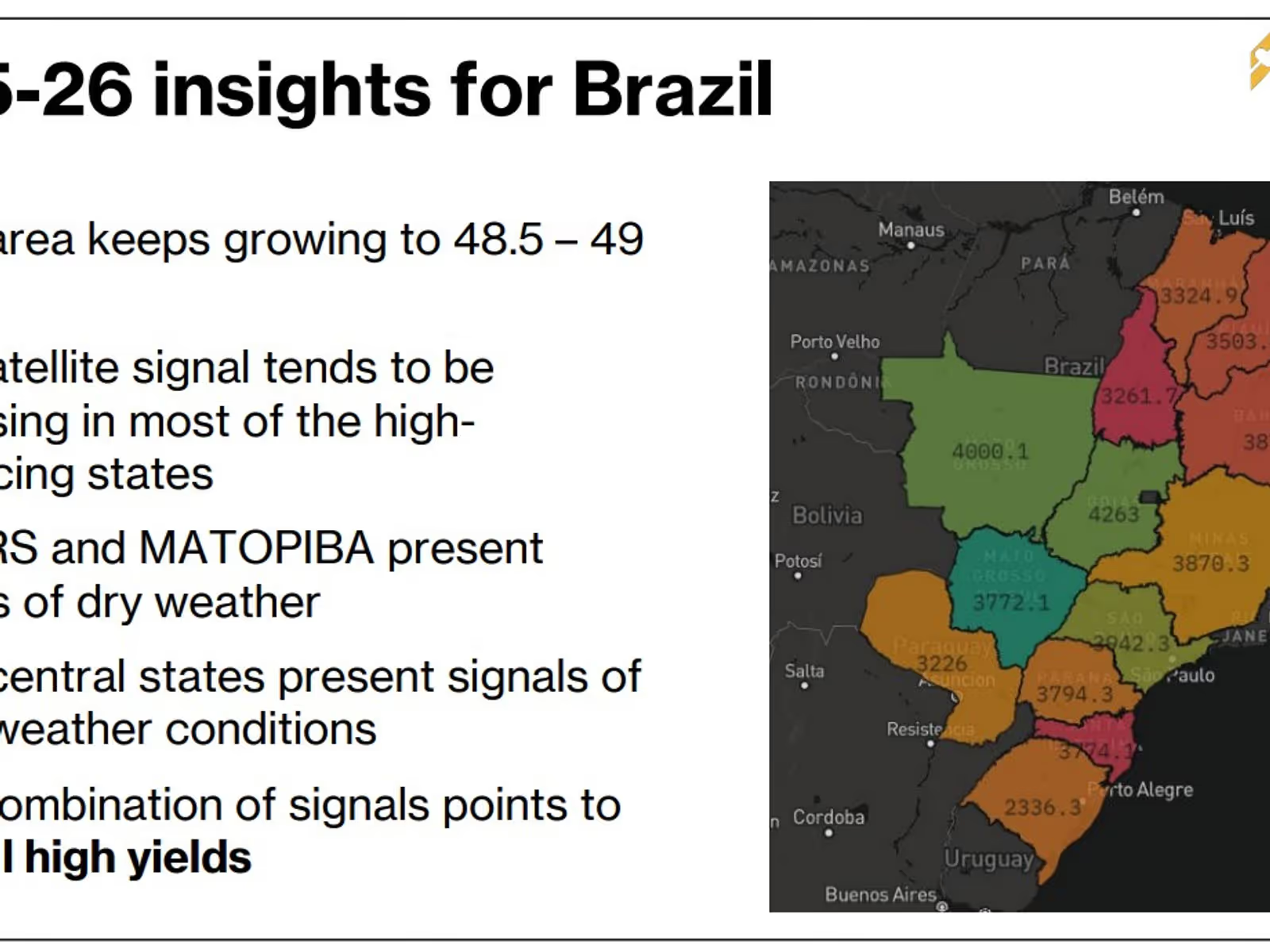
Looking ahead, the session also examined early indicators for Brazil’s 2025–26 soybean season. Satellite coverage has expanded to include up to 12 states, representing roughly 95% of Brazil’s total production footprint, and providing a broader and more granular view of national trends than in prior seasons.
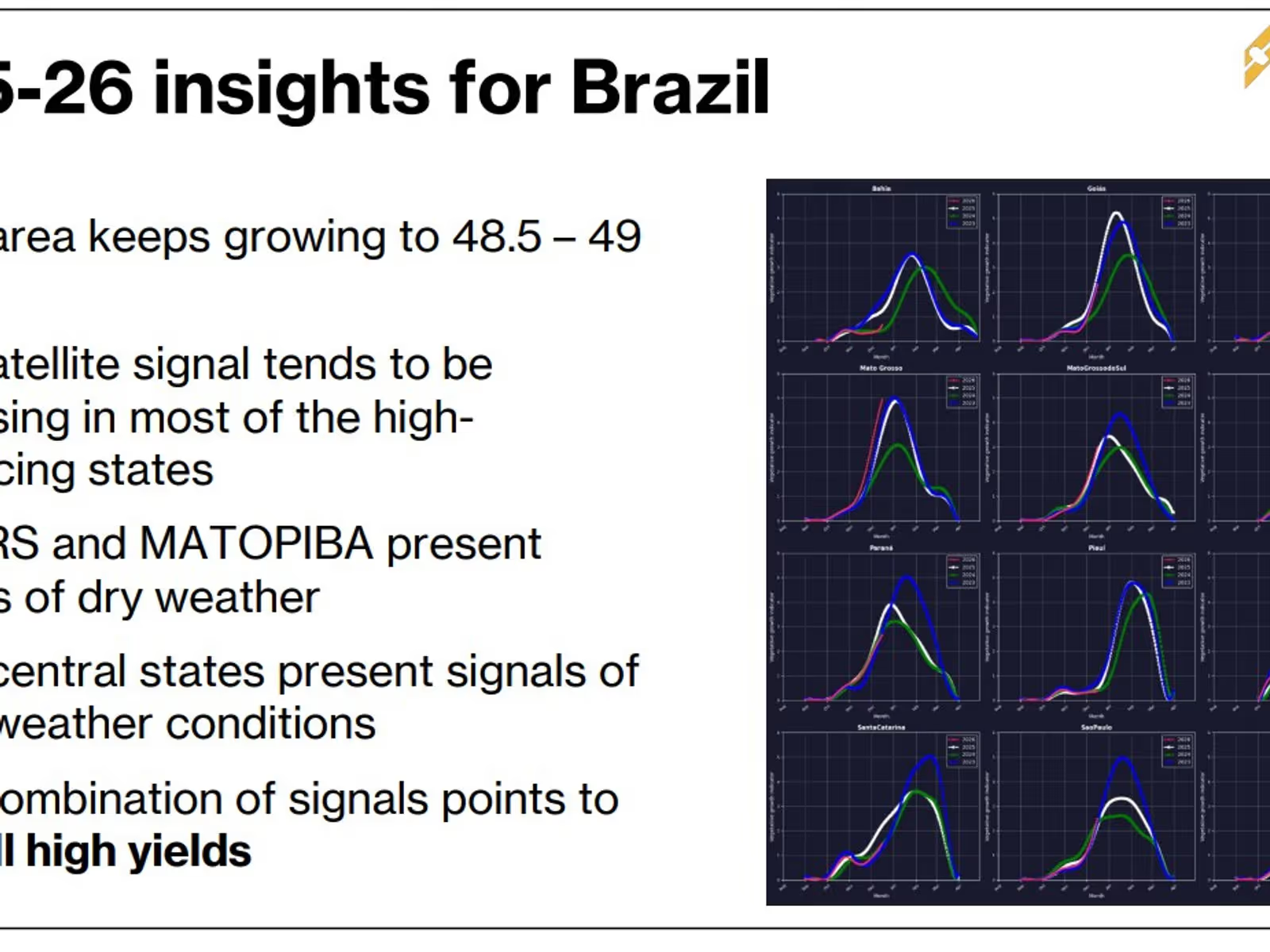
Early signals suggest continued growth in planted area, with total soybean acreage expected to reach approximately 48.5 – 49 million hectares. While conditions appear broadly favorable across many high-producing central states, the satellite data also points to emerging dry-weather signals in regions such as Rio Grande do Sul and parts of MATOPIBA—factors that warrant close monitoring as the season progresses.
Why Timing Is the Real Source of Alpha
A recurring message throughout the event was that alpha in agricultural markets is fundamentally about timing. When yield signals arrive earlier, while uncertainty is still high and consensus has not yet formed, they create opportunities for better pricing, smarter risk management, and more confident decision-making.
This is where SatYield’s approach stands apart. By delivering near real-time, independently verifiable yield intelligence at scale, the platform enables market participants to act sooner, with greater confidence, and with a clearer understanding of risk.
Brazil Soybean Yield Outlook 2026: From Satellites to Signals
The session underscored a broader shift underway in agricultural intelligence: from delayed reporting toward continuous, data-driven insight. As Gabby Nizri emphasized, the future of commodity markets will be shaped by who can see change first and who can translate that visibility into better decisions.
SatYield’s satellite-driven digital twin platform represents a step change in how global crop systems are observed, modeled, and understood. For analysts, traders, insurers, and agribusinesses navigating increasingly volatile conditions, that shift is no longer optional; it is becoming essential.
If you’re navigating agricultural markets where timing defines outcomes, SatYield delivers early, high-confidence yield and area intelligence powered by satellite data and continuously learning digital twins.
Access early-season yield and acreage intelligence before it shows up in official numbers. Request a trial demo today!
more from the blog