
Market Analysis
Why Yield Accuracy Alone Does Not Change Trader Decisions
On January 12th, USDA delivered a classic market surprise that cut right to the heart of how commodity traders think about supply. In its January WASDE report, USDA raised U.S. corn production for 2025/26 above 17 billion bushels by increasing both its yield estimate to 186.5 bushels per acre and its harvested acreage to 91.3 million acres — about 1.3 million acres more than the trade expected.
The result was a sharp upward revision in ending stocks to roughly 2.227 billion bushels, significantly above the consensus. Soybean production also climbed modestly as harvested area expanded, even though yield held near 53 bpa.
The market reaction made it clear: it is not yield alone that changes trader decisions; it is total supply, a product of both yield and area. That distinction matters when we think about where traditional yield models fall short and where satellite data can make a real difference.
Part 1 of 2 — Why Accuracy Alone Fails in Live Commodity Markets
Satellite imagery is everywhere in agricultural markets. Hedge funds, commodity desks, quants, and researchers all talk about it. Models get more complex. Accuracy metrics improve. Yet when markets move the fastest, many yield forecasts still fail to matter.
That raises an uncomfortable but necessary question:
If satellite data is so powerful, why does it so often fail to change trading decisions?
Satellite Data Is Table Stakes, Not an Edge
Let’s start with a simple truth.
Satellite data is already widely used in commodities.
It shows up in:
- Crop yield estimation
- Storage and inventory monitoring
- Ship tracking and logistics
- Event detection such as conflict, drought, or disaster monitoring
Access to satellite imagery is no longer scarce. It is commoditized.
What separates winners from losers is not who has satellite data. It is who can turn signals into decisions before the market reprices.
Accuracy Improvements Don’t Change Behavior
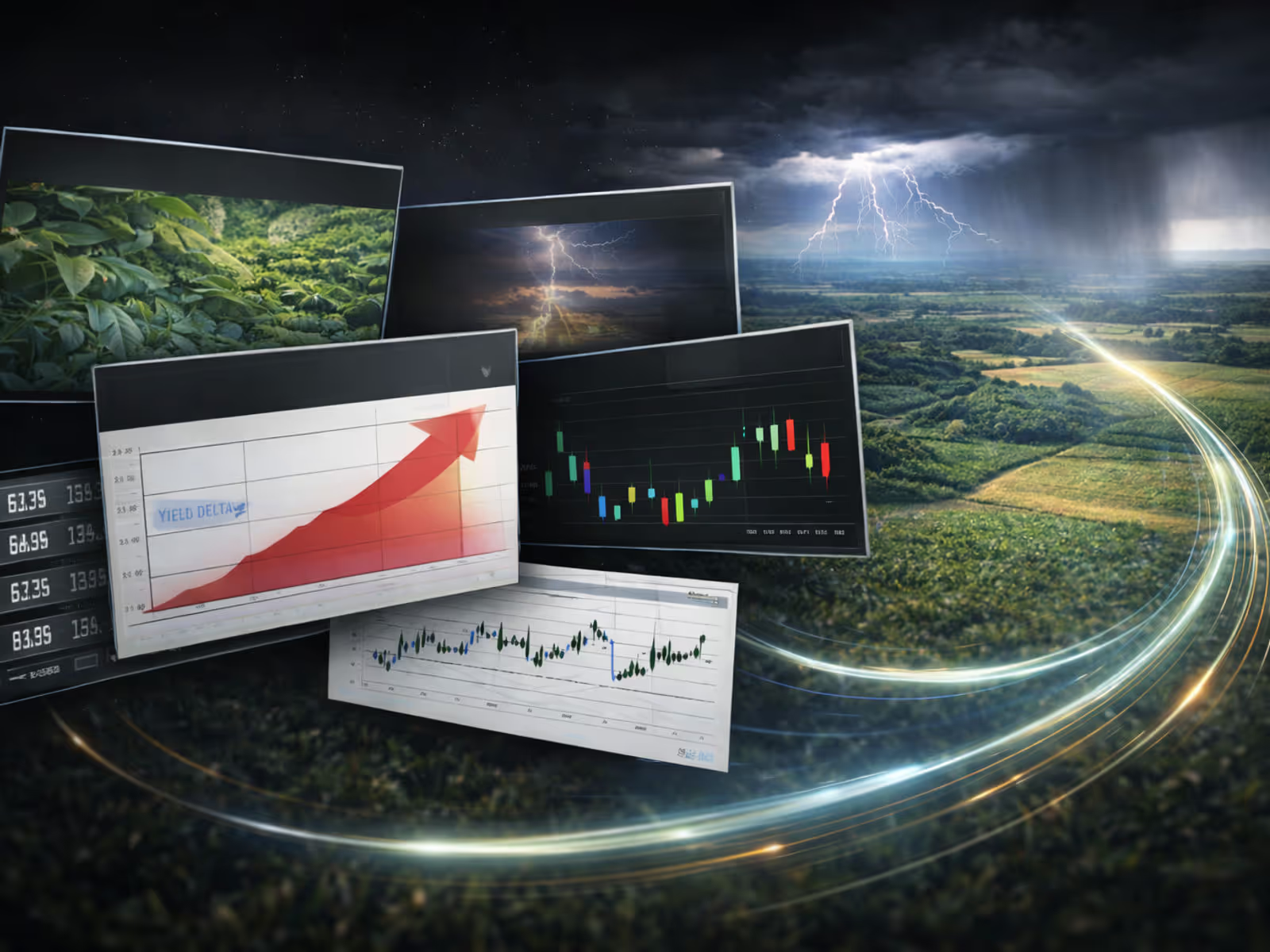
Many modern yield models proudly claim a 2–5 percent improvement in accuracy over existing approaches.
From a research standpoint, that is meaningful.
From a trading standpoint, it usually is not.
Traders do not get paid on accuracy metrics. They get paid on:
- Timing
- Conviction
- Risk allocation
- Positioning before consensus
A modest accuracy lift does not justify:
- Switching providers
- Changing workflows
- Reallocating risk, or
- Moving capital
Unless it changes behavior in real time.
Commodity Yield Forecasting Exists to Explain Change, Not Outcomes
To understand why accuracy alone fails, you need to understand the actual job of a yield model during the season.
Traders are not staring at static yield numbers. They are monitoring change.
They ask:
- What changed since the last weather run?
- How much yield risk just entered or exited the balance sheet?
- Does this new information force a repricing today?
Yield is not a number. Yield is a process unfolding under uncertainty, that distinction matters.
A July Corn Market Shows the Failure Clearly
A Real-World Example
Consider a typical US July corn weather market.
At this stage of the season, traders are not debating what the final yield will be in October. The market is reacting to incremental weather changes, run by run, sometimes hour by hour.
One GFS update adds heat. The next ECMWF run pulls rain. Volatility compresses and explodes within hours.
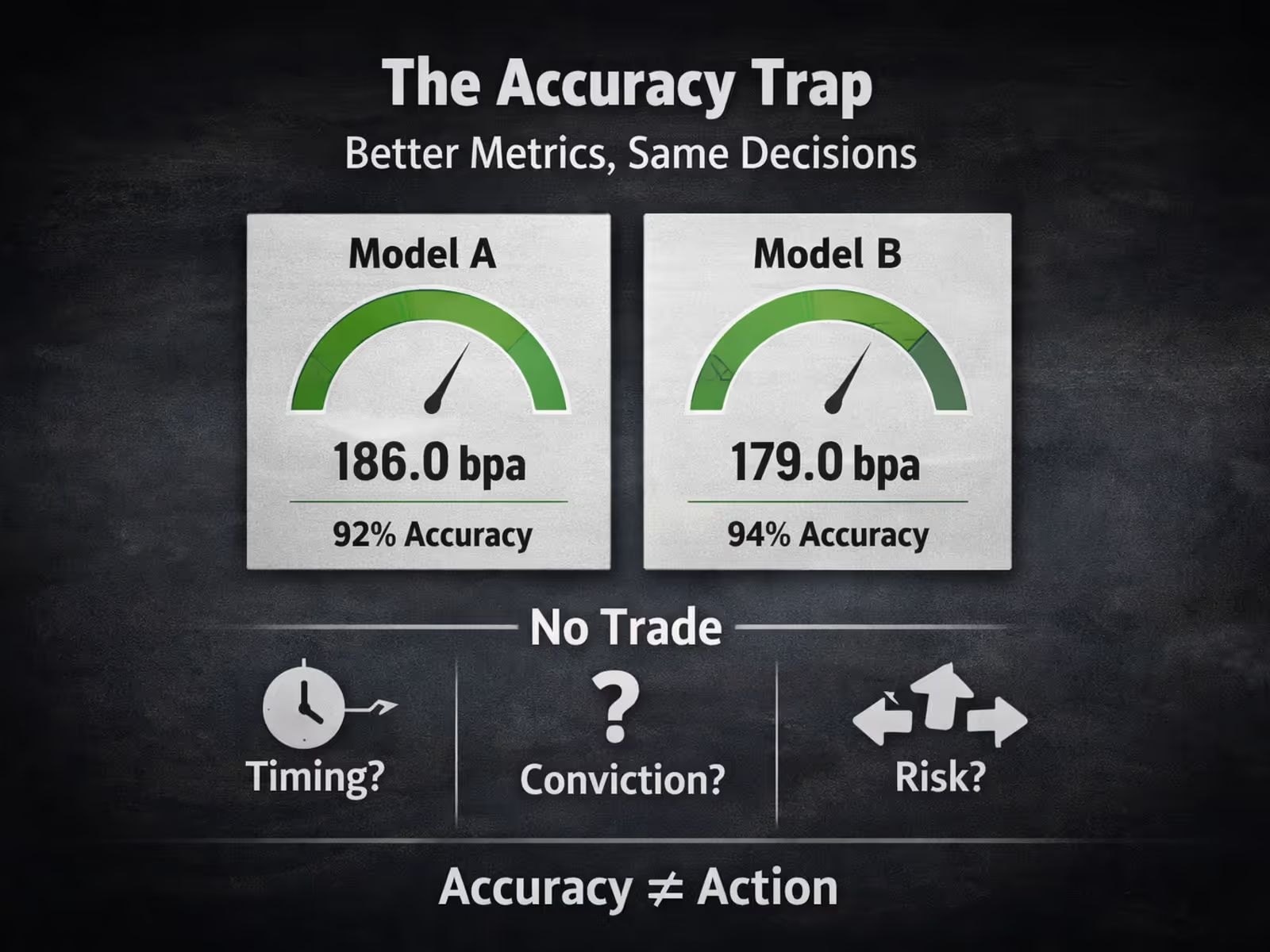
Now imagine two yield models on a trader’s screen:
Model A
- End-of-season corn yield estimate: 186.0 bpa
Model B
- End-of-season corn yield estimate: 179.0 bpa
- Later proven to be more accurate
On paper, Model B wins.
In real markets, both models are effectively useless if neither explains what just changed.
Why Static Yield Numbers Fail During Weather Markets
What traders actually need in July is not a static yield number. They need answers to questions like:
- The latest weather run added 25 mm of rain across the western Corn Belt. What does that mean for yield?
- How many bushels of risk just came out of the balance sheet?
- Does this force us to reprice supply today or wait?
If a model cannot translate today’s weather delta into today’s yield delta, accuracy improvements become irrelevant.
This is where many satellite-driven yield models break down.
Satellite signals respond after the crop reacts. Vegetation indices improve days or weeks after rain arrives. By the time satellite data confirms recovery, futures, options, and spreads have already moved.
As a result, most desks use satellite data in July as:
- a sanity check against weather-only models
- a confirmation layer later in the season
- an anchor for absolute production estimates
Not as a primary decision driver during fast weather markets.
That is why even a 5 percent improvement in accuracy does not trigger trades, does not justify switching providers, and does not change risk allocation when it matters most.
What changes behavior is not accuracy.
It is timing, cadence, and the ability to surface supply inflections while the market is still debating them.
The Structural Limits of Traditional Satellite Yield Models
The July corn example is not an edge case. It exposes structural weaknesses in most satellite-based approaches.
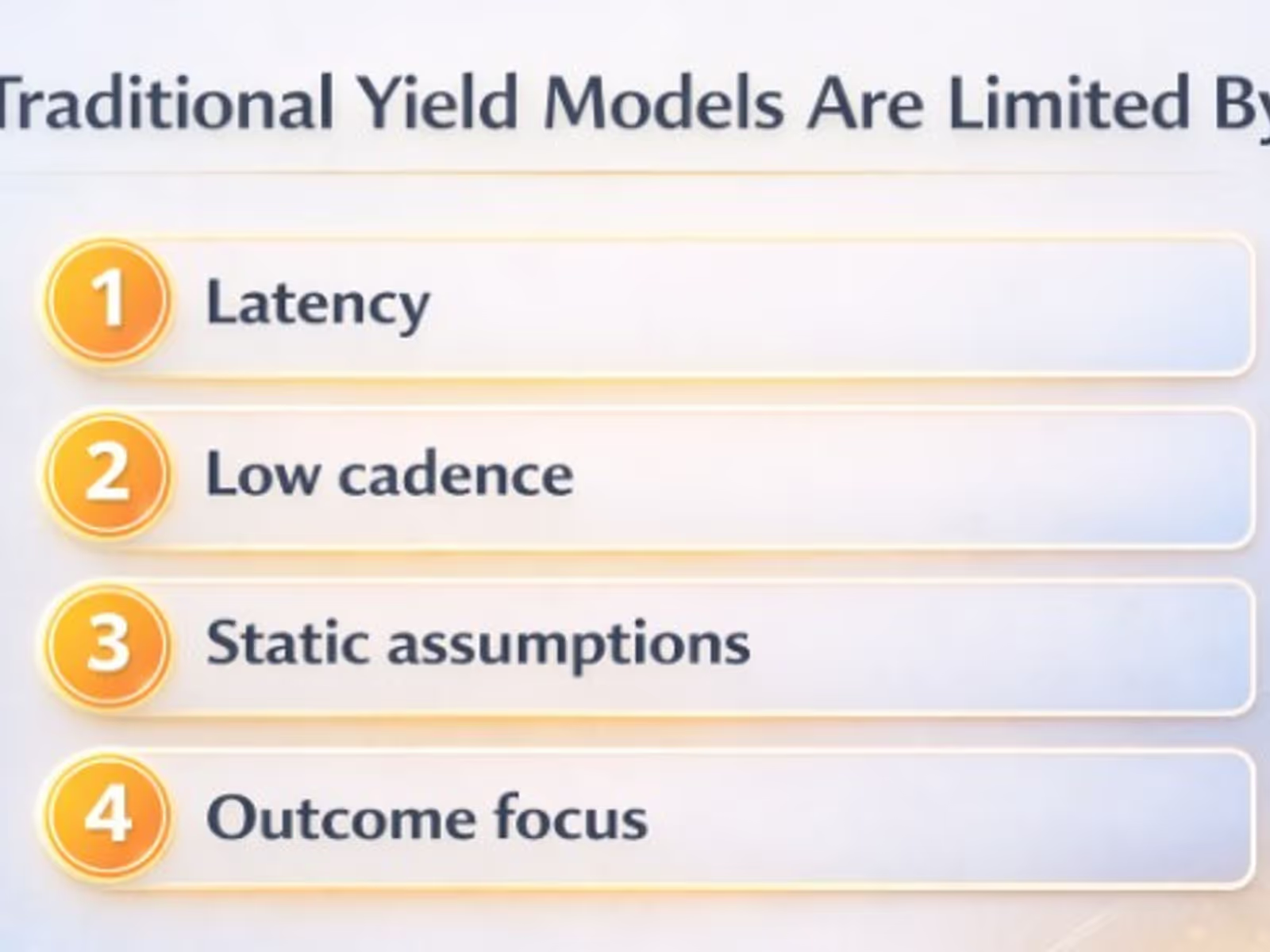
The failures are consistent:
- Latency
- Satellite signals lag weather and crop response.
- Low cadence
- Weekly or monthly updates are not sufficient in volatile markets.
- Static assumptions
- Feature importance shifts across regimes, but models often assume stability.
- Outcome focus
- Most models predict yield as a number, not yield as a dynamic system, underscoring why agriculture forecasting needs real-time, physics-based intelligence rather than lagged, static outputs.
The result is strong explanatory power and weak decision power.
What Actually Creates Edge in Agricultural Markets
From trader feedback, a clear framework emerges.
What matters is:
- Early detection of supply inflections
- Frequent in-season updates
- Translation of weather into yield deltas
- Robustness across regimes
- Independence from USDA timing and revisions
Alpha decays. Signals get crowded.
The products that last become the reference, not the novelty. Not having them feels like a disadvantage.
Why SatYield Was Built Differently
SatYield was not built to slightly improve traditional supply intelligence system.
Instead of treating yield as a static forecast, we model the crop as a living system, integrating:
- Satellite-driven planted, harvested area and observations as state measurements
- Weather as forcing dynamics, not simple inputs
- Crop physics and growth constraints
- Continuous in-season updates on crop conditions, crop loss, and abandonment
This allows us to:
- Detect supply inflections earlier, validate and stress-test S&D scenarios, not just yield points
- Quantify how weather changes translate into yield changes
- Remain relevant during weather markets
- Stay independent of USDA reporting cadence
We are not optimizing for better backtests. We are optimizing for decision advantage.
Why This Matters Now
Weather volatility is increasing.
Markets are moving faster.
Capital reacts in hours, not weeks.
USDA reports remain critical, but they are not designed for intra-season decision making.
A one percent miss in yield is not academic. It moves billions of dollars across futures, options, basis, and spreads.
What’s Next?
This post addressed the practical objections raised by traders and quants:
- Why satellite data alone is not enough
- Why accuracy lifts do not drive adoption
- Why latency kills usefulness
- Why most yield models fail when markets move fastest
In the next post, we will go deeper into the science and system design behind this approach.
We will also explain why modeling crop dynamics, rather than static outcomes, consistently surfaces supply shifts earlier than consensus.
If timing is alpha, signal architecture decides who wins.
And that is where real separation begins.
more from the blog