Market Analysis
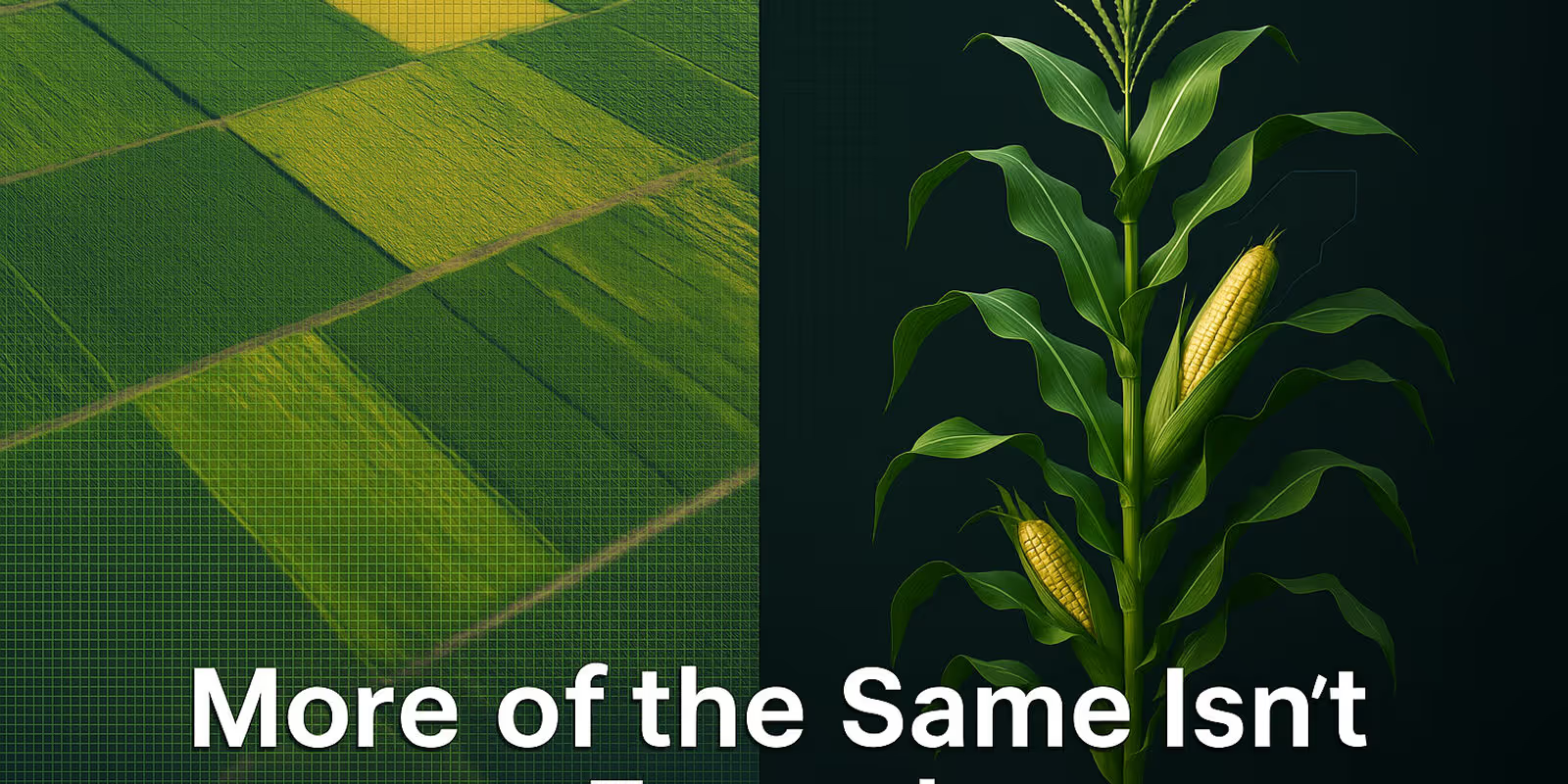
More of the Same Isn’t Enough: SatYield’s Paradigm Shift from Pixels to Physiology
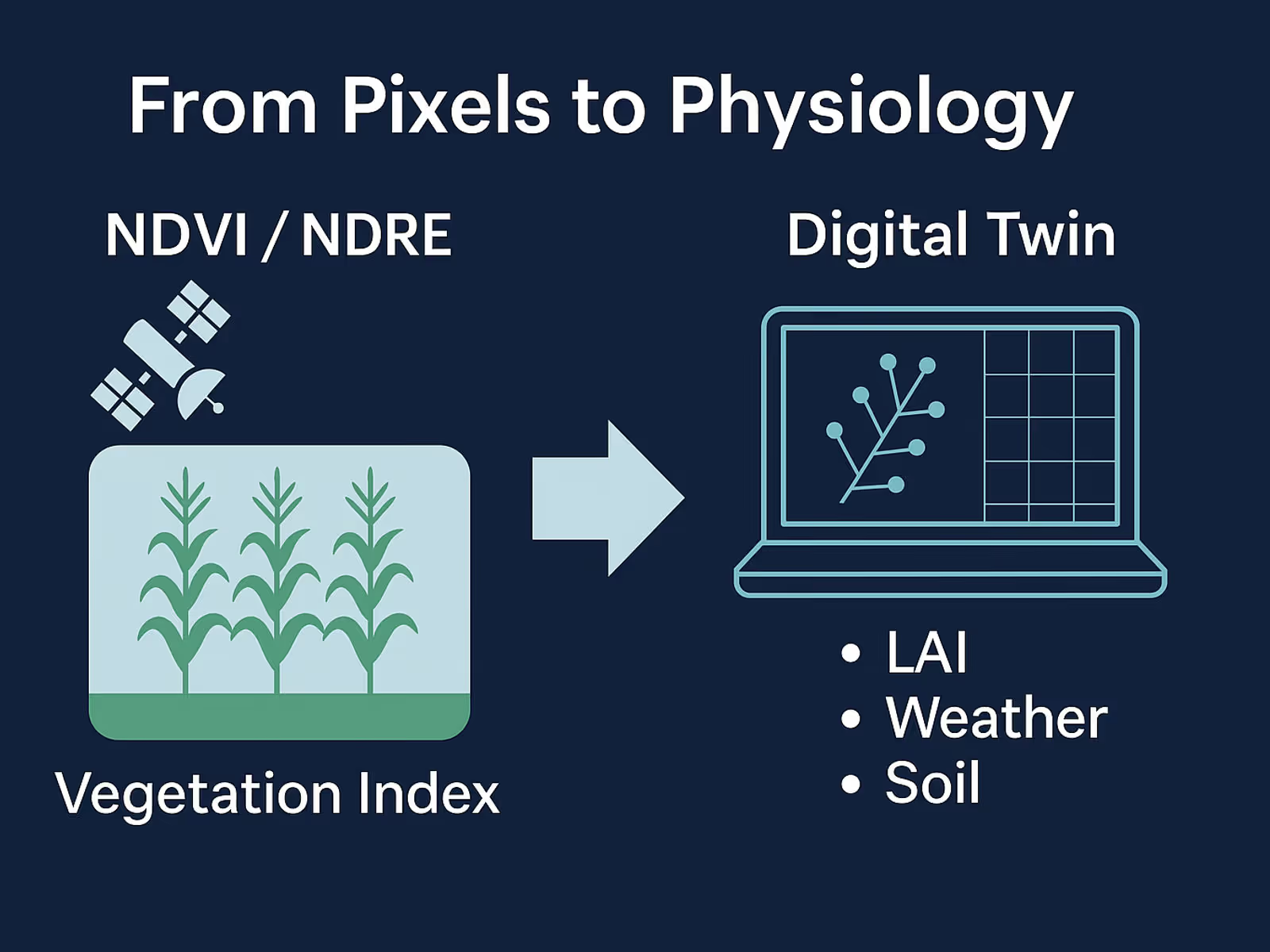
For decades, the agricultural industry has leaned on vegetation indices like Normalized Difference Vegetation Index (NDVI) and Normalized Difference Red Edge (NDRE). These tools, used by the USDA, Planet, EarthDaily, and countless others, analyze how green a crop looks from space.
And to be fair, they’ve been useful. NDVI can highlight stressed areas of a field, track greenness over time, and give analysts a broad sense of crop conditions. Higher resolution satellites brought crisper images and more frequent refreshes. But at the end of the day, these indices are still just proxies for greenness, a.k.a. snapshots of how crops appear, not how they function.
What’s the limitation of pixel-based crop imagery?
The limitation of this method is simple: NDVI and NDRE show what the plant looks like, but not why it looks that way, or more importantly, what it means for yield.
As a result, every major analyst, from government agencies to commercial providers, is working from the same foundation of pixels. Faster satellites and prettier pictures don’t fix the fundamental blind spot.
How does SatYield’s digital twin approach change the game?
SatYield flips the paradigm. Instead of simply observing crops, we simulate them.
By combining:
… SatYield creates digital twins of corn, soybeans, and wheat across millions of acres.
These digital replicas are updated every three days, integrating real-time conditions with plant physiology to forecast yields with unprecedented precision.
Why is LAI more powerful than NDVI?
Unlike NDVI, which is essentially a color metric, LAI (Leaf Area Index) measures the functional surface area of leaves, which is the machinery plants use to capture sunlight and produce energy.
Researchers have long recognized LAI as a direct link to plant growth and yield potential. Studies have demonstrated LAI’s superiority as a biophysical parameter compared to spectral proxies.
By anchoring forecasts to LAI, SatYield delivers signals that are closer to plant physiology and function, not just appearance. This is the critical leap from pixels to physiology.
What does this mean for traders and risk managers?
For financial professionals in ag markets, the difference is profound:
The result: a move from lagging, noisy indicators to leading, actionable signals that align trading decisions with the biological reality of crops in the ground.
What’s next for agricultural intelligence?
The future won’t be won by adding more satellites or higher resolution pixels. The next era of agricultural intelligence will be defined by new science: digital twins, biophysical models, and AI-driven forecasting.
SatYield is leading this shift by offering a new class of signals that cut through noise, expose blind spots, and bring clarity to some of the most volatile markets in the world.
In Closing…
NDVI and NDRE gave us the age of greenness. SatYield is ushering in the age of physiology.
For traders, hedge funds, and risk managers, this is more than just a technological upgrade. It’s a paradigm shift that redefines how we measure, anticipate, and act on global crop supply.
👉 Ready to experience the future of agricultural intelligence? Request a demo of SatYield’s Live Report today!
more from the blog